
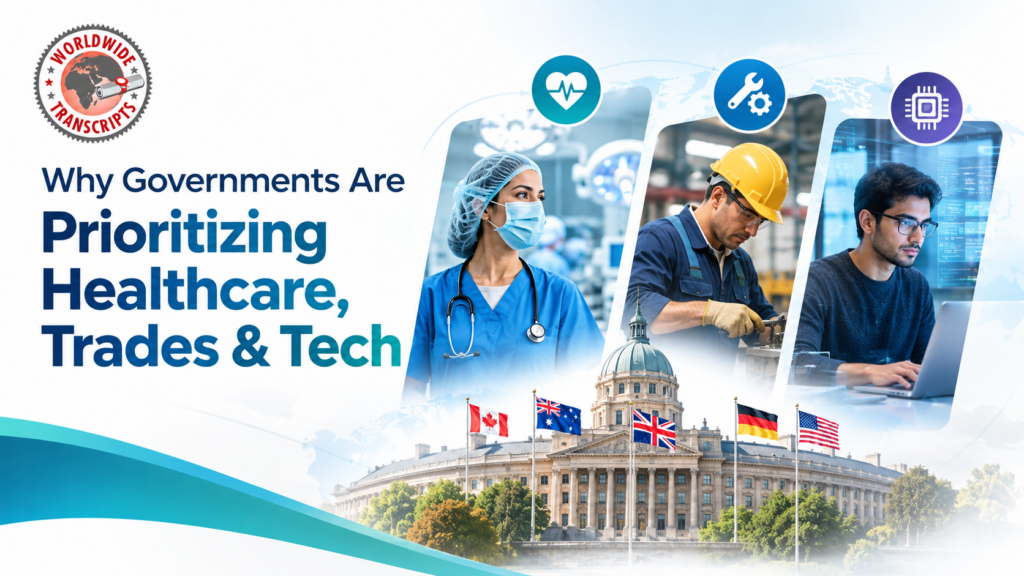
Why Governments Are Prioritizing Healthcare, Trades & Tech: What It Means for Skilled Professionals Planning to Move Abroad

Written by: Abhishek Chatterjee
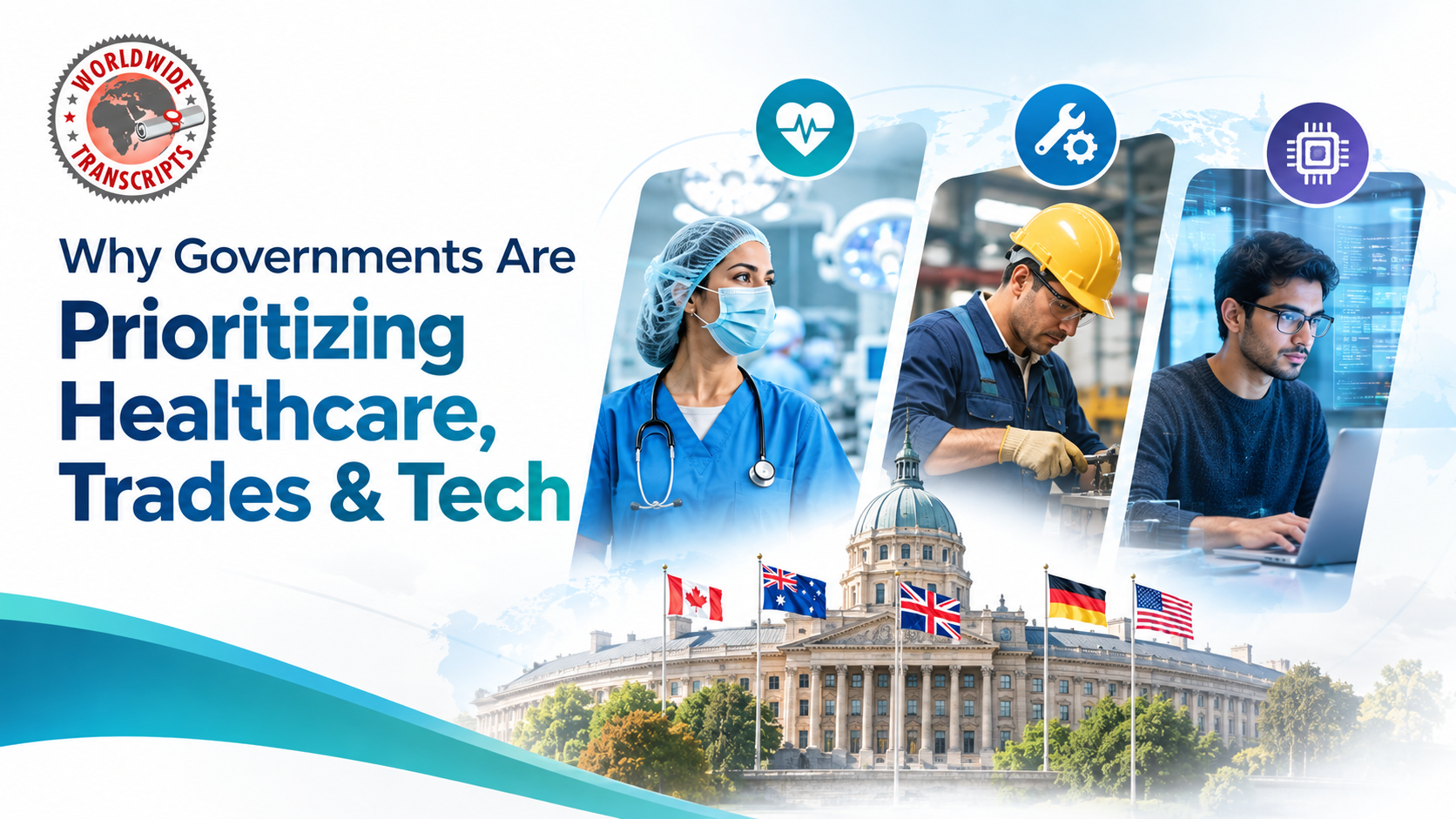
Immigration processes have changed in the last few years more significantly than they did in the past decade. The immigration policies are now more focused and specialized because governments realized that they cannot benefit from any type of immigration. The primary question is now, “Who do we need most?”
This subtle change has resulted in significant differences in the immigration process. Occupation-specific immigration policies are now the order of the day, and governments are offering fast-track visas and invitations to specific specializations. Most importantly, the healthcare, skilled trades, and technology sectors have become some of the most in-demand professions globally. The shift is tremendous, and it should be considered by Indian professionals interested in relocating abroad. Even though their skill set meets the basic demands, candidates must ensure they have the appropriate academic background documented correctly. Let’s explore why these occupations are now in such high demand and how Indian professionals can benefit from the current situation.
Why Countries Are Changing Their Immigration Priorities
Many developed nations are facing similar challenges.
- Aging populations
- Declining birth rates
- Increasing healthcare demand
- Infrastructure expansion
- Digital transformation
- Shortage of skilled workers
Rather than focusing on broad immigration, the governments are trying to prioritize areas where there is a shortage of workers. According to the OECD, most of the developed nations are facing shortages of healthcare, construction, engineering, and information technology workers. As a result, many countries came together to create an immigration system that rewards those who fill the vacant positions in these specific areas. In other words, immigration is becoming more skills-based than country-specific. This is great news for the Indians since India continues to graduate a significant portion of the world’s healthcare, engineering, IT, and technical workers.
Healthcare Professionals Are Needed More Than Ever
Health care has become a global priority. The pandemic revealed a severe shortage of personnel in many countries, as the authorities underestimated the problem. Even now, hospitals, nursing homes, rehabilitation clinics, and community health care organizations are in need of professionals. They invite medics, surgeons, nurses, caregivers, midwives, and other specialists. Here are some countries that are looking for healthcare professionals:
- Registered Nurses
- Doctors
- Pharmacists
- Medical Laboratory Technologists
- Physiotherapists
- Occupational Therapists
- Radiographers
- Healthcare Assistants
Canada has prioritized healthcare-related occupations in its list of the jobs of the category-based Express Entry selection. Australia, New Zealand, Germany, and the United Kingdom have witnessed an increase in demand for healthcare professionals and are recruiting abroad. The World Health Organization has projected a shortage of millions of healthcare workers globally by the end of the decade, and thus several countries are seeking to address the shortage by filling vacant positions with overseas workers.
Skilled Trades Are Finally Getting the Recognition They Deserve
For years, skilled trades were overlooked in the immigration discourse. Countries are now realizing that there is a demand for electricians, welders, plumbers, carpenters, heavy equipment operators, air conditioning and refrigeration mechanics, automotive mechanics, and construction workers. The need for infrastructure, housing, renewable energy, and manufacturing has created a demand for skilled trades workers. Canada has category-specific invitations that include a number of skilled trades. Australia’s General Skilled Migration program and state nomination schemes continue to prioritize skilled occupations. Germany has streamlined its processes to attract more skilled workers under the Skilled Immigration program. The Gulf States are investing in smart cities, transportation networks, renewable energy, healthcare, and tourism and have a consistent need for skilled trades workers.
Technology Professionals Continue to Drive Innovation
Artificial Intelligence, Cloud Computing, Cybersecurity, Data Analytics, Software Development, Digital Infrastructure, Almost any industry now relies on technology. As countries prioritize digital public services and companies embrace automation, technology professionals are currently the most in-demand immigrants worldwide. Roles receiving strong demand include:
- Software Engineers
- AI Specialists
- Cloud Engineers
- Data Scientists
- Cybersecurity Analysts
- DevOps Engineers
- Network Specialists
- Machine Learning Engineers
Migration systems in various countries now prioritize tech professionals by implementing immigration programs that facilitate access to digital jobs. Canada continues to prioritize STEM fields by conducting various category-based Express Entry draws. Australia updates its Skilled Occupation List periodically to reflect the country’s technology needs. Germany’s Opportunity Card has simplified the immigration process for eligible job candidates to find work and settle in the country.
New Immigration Pathways Are Making Skilled Migration Easier
Governments are not just identifying priority occupations, they’re redesigning immigration systems around them. Some important developments include:
- Canada’s Category-Based Express Entry
The Canadian immigration program now allows occupation-based invitations for healthcare, STEM, trades, transport, agriculture, education, and French language. The new policy aims to attract eligible healthcare professionals and other specialists instead of using the previous CRS points system. This reform has created more opportunities for Indian applicants.
- Australia’s Skills in Demand Visa
The Australian government has initiated a skills in demand concept to address the needs of businesses that want to sponsor migrants based on their recruitment needs. This method is supposed to facilitate the migration process for occupations with shortages while providing a clear picture of demand to would-be migrants.
- Germany’s Opportunity Card
The Opportunity Card was launched by the German government to attract foreign specialists by implementing a points-based migration system. It allows eligible migrants to enter Germany, find a job, and settle there permanently without having to apply for a permanent job offer first. This opportunity is particularly advantageous to Indian professionals.
- New Zealand’s Green List
New Zealand continues to make changes to its Green List, which enables migrants with qualifications in particular occupations to gain residency faster and receive work visas more easily. Healthcare and engineering are among the high-demand areas in New Zealand.
Why Transcript Procurement Should Be Planned Early
One of the biggest mistakes applicants make is waiting until they receive an Invitation to Apply or a job offer before arranging transcripts. University processing can take several weeks depending on:
- University procedures
- Document verification
- Dispatch timelines
- International courier requirements
- Electronic transcript availability
Starting early reduces unnecessary stress and prevents immigration timelines from being affected. Being document-ready often means being opportunity-ready.
The Bigger Picture
Immigration is no more just filling out forms governments want people who will bring something to the table from day one. Health care professionals, for example, help the health care sector to function trades help to build everything from homes to infrastructure to industry technology helps to innovate and make the economy grow. This is why these professions are in demand year after year in numerous immigration programs around the world. The opportunity is great for Indian professionals, but the competition is high as well – which means that preparing the necessary documents and proving your skills and experience correctly is half the battle.
Author

Why Choose Worldwide Transcripts?
Conclusion
Global immigration is undergoing a significant transformation, characterized by increased specialization, digitization, and reliance on professional expertise. Nations worldwide are actively pursuing the attraction of qualified workers who can address emerging economic and social challenges while contributing to the development of critical sectors such as healthcare and technology. This presents a favorable opportunity for professionals and specialists to consider international work and life.
Nevertheless, it is essential to recognize that immigration involves a complex process that requires careful consideration and preparation long before submitting a visa application. Thus, it is necessary to collect and organize all diplomas and university transcripts to ensure there are no documents certifying one’s education level. After the selection process, when a candidate receives an offer, they will not have to waste time preparing papers when there is a chance to start working on a new project.
Contact Details
Website: Worldwide Transcript
Address: E/141, 1st Floor, Sec-1, Avanti Vihar, Raipur, Chhattisgarh- 492001.
Phone No: +91 8817 353 627
Instagram | Facebook | Youtube | Linkedin