
Australia’s Migration System Is Changing Again: What It Means for Indian Skilled Professionals and Students

Written by: Abhishek Chatterjee
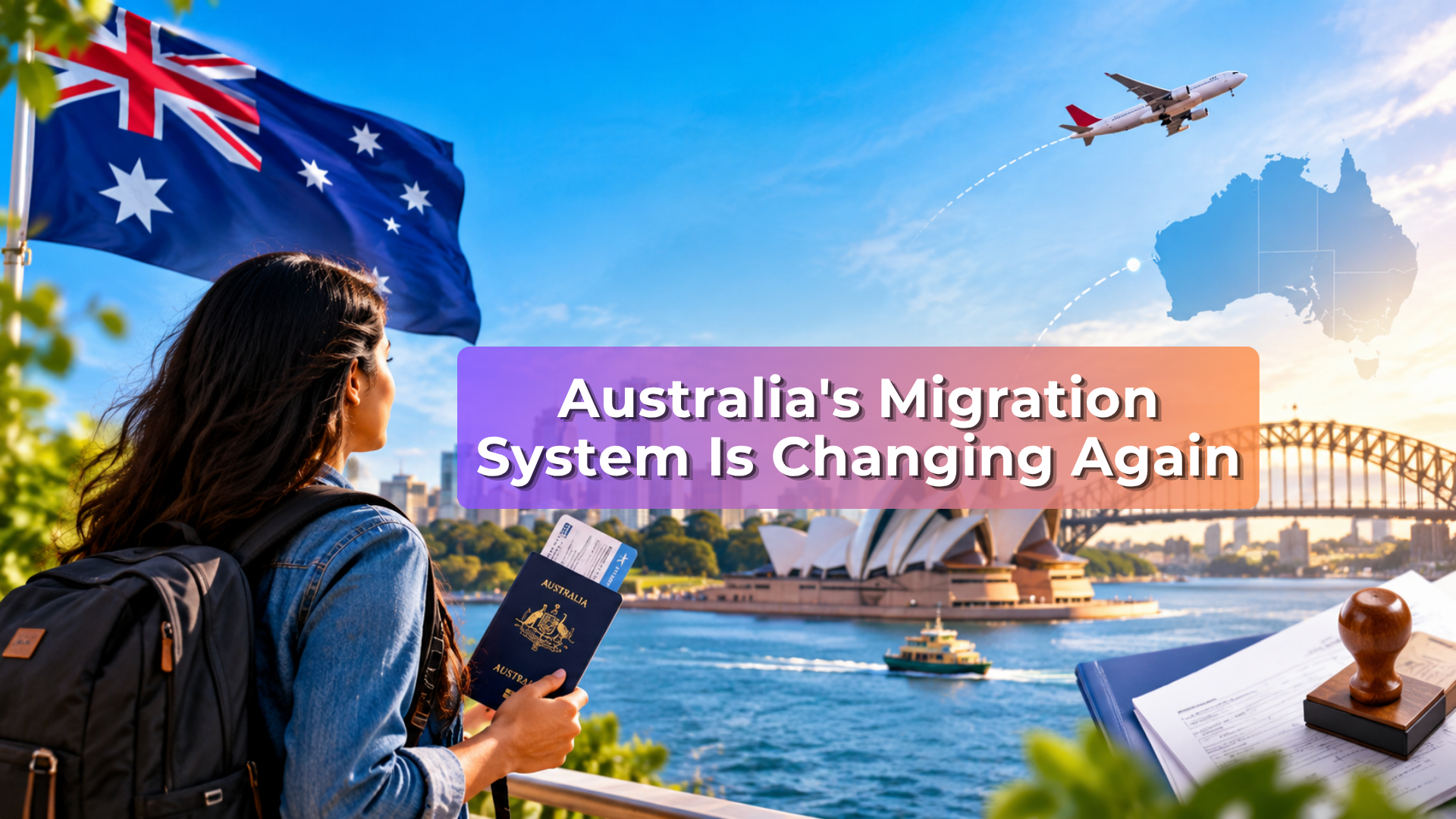
Australia has always attracted immigrants from all over the world, and the reason for this is simple – job opportunities, high-quality education, healthcare, and an overall high level of living. However, as much as it may seem that everything is set for a comfortable life and a promising career, everything is not as smooth as one might think. More precisely, the immigration policy itself is undergoing changes – Australia is striving to adjust the immigration system in order for it to meet the needs of the job market.
The policies that secure job opportunities for immigrants have become even more advantageous for those who want to migrate to Australia, but only for those who know how to choose a profession that is in demand. At the moment, most of the changes are related to professional skills, which means that there are vacant positions in different spheres that require specialized knowledge. It is necessary for aspiring immigrants to conduct proper research on their chosen field of work, as well as collect all required documents and choose the most suitable migration option. Let’s take a closer look at the changes that have happened recently.
Why Australia Keeps Updating Its Migration System
Australia’s economy is highly dependent on immigration, and the demand for skilled professionals in countries such as healthcare, engineering, information technology, construction, education, hospitality, agribusiness, and renewable energy is growing. In terms of Australia’s Migration Program, a significant share of places are allocated to migrants with skills and occupations relevant to the country’s needs, and therefore, skilled worker visas dominate the scheme. At the same time, regional Australia, or areas outside major cities, is also a priority for the government, as employers in these regions are in acute need of labor.
As a result, in parallel with the need for an influx of migrants, there is a requirement for specific skills.
Therefore, for Indians, the ability to work, skills, and qualifications, as well as certification of education, become essential advantages.
What’s Changing in Australia Migration System?
Several key developments are currently shaping Australia’s immigration landscape.
Australia’s Immigration Priorities are Changing
Australia remains focused on attracting migrants with occupations on skilled occupation lists. Individuals working in Information Technology, Artificial Intelligence, Cyber Security, Engineering, Healthcare, Nursing, Construction, Renewable Energy, Education, and Trades have better prospects than those with other skill sets. The country is placing more emphasis on quality over quantity.
Regional Australia is Emerging as a More Appealing Destination
One of Australia’s main immigration strategies is to encourage migrants to settle in regional areas rather than in Sydney, Melbourne, or Brisbane. Regional Australian cities are growing and need skilled workers in various industries. There are several benefits to considering regional Australia as a settlement option:
- Higher chances of being nominated
- Extra points for regional migration
- Faster track to permanent residency in most cases
- Broader eligibility for occupations
- Less competition than in the capital cities
Many Indian migrants who previously only considered major cities are now open to relocating to regional Australia.
Australia’s Key Skilled Migration Visas
Selecting the appropriate visa category is often the most critical step in the migration process.
- Skilled Independent Visa (Subclass 189)
The Skilled Independent visa (Subclass 189) is designed for highly skilled workers who do not require an employer or state nomination. The subclass’s main advantage is that it provides permanent residency from day one. In addition, Skilled Independent visa holders have the freedom to live anywhere in Australia and are not tied to a specific employer. Given the competitive nature of this category, only migrants with a higher score and in demand occupations can expect to receive an invitation to apply.
- Skilled Nominated Visa (Subclass 190)
Skilled Nominated visa (Subclass 190) is a permanent residency visa that requires state nomination. Each state and territory has specific occupations in demand. The subclass’s main benefits include permanent residency and extra points for state nomination. In addition, migrants have better chances of receiving an invitation if they apply for occupations in demand in a particular state or territory. All Australian states and territories publish their priority occupation lists.
- Skilled Work Regional Visa (Subclass 491)
Skilled Work Regional visa (Subclass 491) is currently one of the most sought-after options as it provides extra points and a faster track to permanent residency. It also gives visa holders more flexibility as they can choose between being nominated by an Australian state/territory or a family member who resides in a regional area. The subclass offers various benefits, including migration points for settling in regional Australia, the ability to live and work in regional areas, and a pathway to permanent residency. For Indian skilled workers, Skilled Work Regional visas can be a viable alternative to more competitive main cities’ migration programs.
- Employer Sponsored Visas
Australian employers with an identified skills needs can sponsor migrants under various employer-sponsored visa categories. Most employer-sponsored visas allow for long-term residency, while some provide a pathway to citizenship. Common occupations in demand include healthcare, IT, Engineering, Construction, Hospitality, and Mining.
- New Skills in Demand Visa (SID)
One of the most significant recent developments in Australia’s visa policy is the newly established Skills in Demand (SID) Visa category. The category was created to replace the Temporary Skill Shortage (TSS) system and is focused on facilitating faster employer-sponsored migration while better addressing skill needs. The new visa category benefits both employers and skilled migrants, streamlines Australia’s temporary and permanent skilled migration systems, and allows more permanent residency places for experienced workers. The SID visa is more accessible for Indian skilled workers as it provides a more straightforward pathway into Australia’s workforce for those with the relevant qualifications and experience.
Regional Australia: Hidden Opportunities Many Indians Miss
Regional Australia isn’t just about smaller towns anymore. Many regional centres now offer:
- Modern infrastructure
- International airports nearby
- Growing technology sectors
- Healthcare expansion
- Universities
- Manufacturing industries
- Better work-life balance
Popular regional destinations include:
- Adelaide
- Hobart
- Darwin
- Launceston
- Ballarat
- Bendigo
- Toowoomba
- Geelong
- Albury-Wodonga
These regions continue to receive government support through migration incentives because skilled workers are urgently needed.
State Nomination Programs Worth Watching
Every Australian state has different workforce needs.
- South Australia,
- Western Australia
- Tasmania
- Northern Territory
- Victoria
- New South Wales
- Queensland
- Australian Capital Territory (Canberra)
Each state updates its occupation priorities regularly, making it essential to monitor eligibility before applying.
Why Academic Documents Matter More Than Ever
Regardless of which visa you choose, your academic credentials play a central role in the migration process. Australian authorities and skills assessment bodies require official educational documents to verify your qualifications before many migration applications can move forward. These often include:
- Official Indian University transcripts
- Degree certificates
- Medium of Instruction (MOI) certificates (where applicable)
- Official records verification
If your documents are incomplete or delayed, your entire immigration timeline can be affected. This is where planning ahead becomes extremely important.
Why Transcript Procurement Should Never Be Left Until the End
Many applicants spend months preparing for English language tests, skills assessments, and visa applications. But surprisingly, university transcripts often become the biggest reason for unexpected delays.
Indian universities may require multiple verification stages before issuing official transcripts. Processing timelines can vary significantly depending on the institution. Waiting until you receive an invitation to begin collecting transcripts may result in unnecessary delays. Having your documents ready early gives you the flexibility to respond quickly when opportunities arise.
Smart Preparation Gives You an Advantage
Australian immigration trends are becoming increasingly competitive. It is the prepared applicants who get to take advantage of the emerging opportunities. A strong immigration profile requires a valid passport, English language test results, updated work experience documentation, skills assessment, official university transcripts, proper academic verifications, financial planning, Being document-ready makes it easier to react promptly to any state nomination or invitation rounds.
Author

Why Choose Worldwide Transcripts?
Conclusion
Australia’s immigration program is undergoing a much-needed change, making way for skilled migrants with proper accreditation to take their place in the economy. For the Indian skilled workforce and students, this means the importance of preparing the right visa application package ahead of time cannot be stressed enough. Having academic records verified and organized can make the immigration process significantly less stressful and much more straightforward.
If Australia is on your future plan, do not leave your visa application to the last minute. A well-prepared application backed by official academic transcripts will give you an excellent opportunity to make a great first impression.
Contact Details
Website: Worldwide Transcript
Address: E/141, 1st Floor, Sec-1, Avanti Vihar, Raipur, Chhattisgarh- 492001.
Phone No: +91 8817 353 627
Instagram | Facebook | Youtube | Linkedin