
Uncategorized

Anna University Transcript
Uncategorized

Common situations where students suddenly need an Anna University Transcript

Anna University Transcript Graduating from a prestigious institution like Anna University is a significant milestone for any engineering student. However, the true utility of your degree often depends on having the right documentation to back it up. While your degree certificate and consolidated marksheets are important for general purposes, the Anna University Transcript is the official, comprehensive record required for global transitions. Many students mistakenly assume they only need their transcripts when they decide to apply for a Master’s degree. In reality, several “emergency” scenarios can arise where having an official Anna University Transcript becomes a non-negotiable requirement. Below are the most common situations where students and alumni suddenly find themselves in urgent need of this document. 1. Fast-Track Admissions for Higher Education Abroad The most common situation is the pursuit of higher education in countries like the USA, UK, Germany, or Australia. Most international universities do not accept individual mark sheets for the final admission stage. They require an official Anna University Transcript issued in a sealed and stamped envelope. Credit Mapping and GPA Conversion: Universities abroad use transcripts to map your Indian credits to their local grading system. For instance, if you are applying to a German university, they may use the “Modified Bavarian Formula” to convert your Anna University CGPA. A transcript provides the detailed subject-wise breakdown necessary for this calculation. Handling Sudden “Conditional Offer Letters”: Many top-tier universities have rolling admissions. If you receive a sudden conditional offer, the only way to “uncondition” it and secure your seat is by submitting your verified Anna University Transcript immediately. Delaying this by even a week can result in your seat being allocated to another candidate on the waiting list. The Global Standard for Integrity: While your college might provide a local record, institutions worldwide recognise the university-issued transcript as the only authoritative proof of your academic journey. This is because it is printed on high-security university stationery that is difficult to forge. Backlog and Attempt History: Foreign admission committees look for academic consistency. A transcript from Anna University clearly lists all attempts, ensuring transparency. If you have moved away from Chennai, managing this procurement can be stressful, which is why many turn to Worldwide Transcripts to handle the coordination with the Controller of Examinations (COE). Graduating from a prestigious institution like Anna University is a significant milestone for any engineering student. However, the true utility of your degree often depends on having the right documentation to back it up. While your degree certificate and consolidated marksheets are important for general purposes, the Anna University Transcript is the official, comprehensive record required for global transitions. Many students mistakenly assume they only need their transcripts when they decide to apply for a Master’s degree. In reality, several “emergency” scenarios can arise where having an official Anna University Transcript becomes a non-negotiable requirement. Below are the most common situations where students and alumni suddenly find themselves in urgent need of this document. 2. Mandatory WES Evaluation for Canada and USA Immigration If you are planning to move to Canada through Express Entry or seeking a visa for the USA, you will likely encounter the Educational Credential Assessment (ECA). Evaluation bodies like World Education Services (WES), IQAS, NCEES & ECE require a verified and official Anna University Transcript to prove that your four-year engineering degree is equivalent to their local standards. ECA Deadlines & CRS Points: Immigration draws can happen at any time. Your Comprehensive Ranking System (CRS) score heavily depends on your education level. If your profile is ready but your documents aren’t accepted by WES, you could miss an Invitation to Apply (ITA) during a low-cutoff draw. Direct-from-University Protocol: WES has a strict protocol they often require the university to send the documents directly from the university. If you send the documents yourself, they will be rejected, costing you weeks of delay and extra fees. Detailed Backlog Records: Unlike a consolidated marksheet, a transcript shows all attempts and subjects. This transparency is a key requirement for WES Evaluation for Indian Transcripts. Validity and Storage: Once verified, your WES report is typically valid for five years. Securing your Anna University Transcript now means you are prepared for multiple immigration or job opportunities throughout that period. 3. Sudden Job Opportunities in Multi-National Corporations (MNCs) In the corporate world, background verification (BGV) is becoming increasingly rigorous. If you land a job at a top-tier MNC or a firm that handles sensitive data, they may ask for more than just your final degree certificate during the onboarding process. International Postings & Visa Transfers: If your company decides to transfer you to an overseas branch (e.g., on an H1-B or L1 visa), the visa authorities in those countries will demand an official Anna University Transcript to verify your technical expertise. This often happens on a “high-priority” basis with tight deadlines. Professional Licensing (PE Status): For engineers looking to become a “Professional Engineer” (PE) in Canada or the UK, licensing boards require a full transcript to ensure your coursework matches their professional standards. Without it, you cannot legally practice engineering or use the “P.Eng” title in those regions. Verification of Authenticity: Employers use transcripts to ensure that there are no discrepancies in the marks or subjects listed on your resume. It protects the company’s reputation by weeding out candidates with misrepresented qualifications. Third-Party Audits: Most MNCs hire specialised firms for BGV. These firms require the Anna University Transcript to complete their “Education Check.” If your documentation is incomplete, your joining date may be pushed back, or your offer could even be rescinded. 4. Visa Processing and Embassy Interviews Whether it is a student visa (F1) or a work permit, embassy officials often request academic transcripts during the interview or document upload stage to verify the “bonafides” of an applicant. Proof of Intent & Academic Consistency: For students, the Anna University Transcript proves you are a legitimate student with a consistent academic record. It helps the consular officer see your progression and commitment to your field

Bangalore University Transcript
Uncategorized

Is a Bangalore University Transcript required for every country?

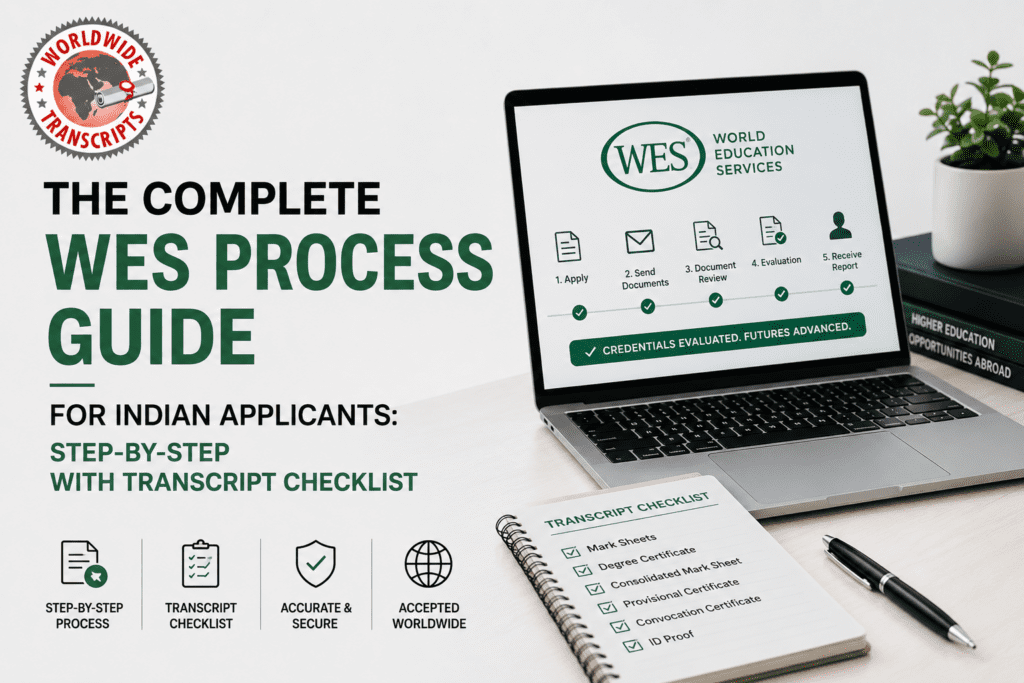
Bangalore University Transcript Getting your academic records in order is the most critical step for anyone planning to move abroad for studies or work. If you are a graduate of Bangalore University (BU), you might be asking yourself: Is a Bangalore University Transcript required for every country? The short answer is: Almost always, yes. Whether it is for a Master’s degree in the US, a PR visa for Canada, or an employment contract in Germany, your transcript is the “official voice” of your academic history. Unlike simple photocopies, a transcript is a legally recognised document that bridges the gap between the Indian education system and global standards. At Worldwide Transcripts, we help thousands of BU alumni navigate the complex, often bureaucratic halls of the university to secure these documents. In this blog, we will break down exactly why this document is your global passport, how it differs from your daily college records, and which countries demand it the most. What is a Bangalore University Transcript? Before we dive into country-specific requirements, let’s clarify what a Bangalore University Transcript actually is. Many students confuse it with a marksheet or a degree certificate, but in the eyes of international recruiters and admissions officers, they are worlds apart. The Breakdown: Marksheet vs. Degree vs. Transcript Marksheet (Marks Card): This is a report card issued at the end of each semester or academic year. While it details your performance in specific subjects at that time, a collection of loose marksheets is often considered “unofficial” or “unverified” by foreign bodies because they are easily forged. Degree Certificate: This is your “graduation trophy.” It is a one-page document confirming you completed the program. However, it doesn’t show how you performed or what specific subjects you mastered. It tells them you are a “Graduate,” but not much else. Bangalore University Transcript: This is a comprehensive, consolidated record issued directly by the university on official letterhead. It serves as a “narrative” of your entire academic journey. It lists: Every subject studied from the 1st to the 6th (or 8th) semester. The exact credits or maximum marks for each paper. Attempts made (including any backlogs or re-appearances). The medium of instruction (crucial for English-speaking countries). Detailed grading scales that help foreign universities convert your “marks” into a “GPA.” The Power of the “Sealed Envelope” The most critical feature of a Bangalore University Transcript is the packaging. The university places these documents in a special envelope, which is then: Glued and Taped: To ensure it cannot be opened without leaving evidence. Stamped across the flap: Usually by the Registrar (Evaluation) or the Controller of Examinations. Signed/Initialed: To provide a human layer of verification. This “Sealed Envelope” is the gold standard for international verification. ECA bodies like WES (World Education Services) or CES will immediately reject any document that has been opened by the student. The seal guarantees to the receiving country that the information inside is 100% authentic and has come directly from the source. Is a Bangalore University Transcript Required for Every Country? While every country has different visa rules, the academic institutions within those countries almost universally require a transcript for credit evaluation. Here is a breakdown by region: 1. The USA and Canada (The “WES” Factor) For North America, a Bangalore University Transcript is absolutely mandatory. Education: Universities in the USA and Canada need a “Course-by-Course” evaluation to convert your Indian marks into a GPA on a 4.0 scale. Immigration: If you are applying for Canada PR through Express Entry, you must get an Educational Credential Assessment (ECA) from bodies like WES (World Education Services). WES will not accept your degree or marksheets directly from you; they require a sealed transcript sent directly from Bangalore University, or use a transcripts service provider like Worldwide Transcripts to ensure swift procurement and prompt dispatch. 2. The United Kingdom (UK) The UK has become a top destination for BU students. While some universities might initially accept scanned marksheets for a “Conditional Offer,” they will eventually require an official Bangalore University Transcript to issue your CAS (Confirmation of Acceptance for Studies) for the visa process. 3. Germany and Europe (APS Verification) Germany has recently introduced a mandatory APS (Academic Evaluation Centre) certificate for Indian students. To get an APS certificate, you must provide verified transcripts. Public universities in Germany are highly competitive and free of tuition; they use your transcript to ensure your previous syllabus matches their rigorous standards. 4. Australia and New Zealand These countries focus heavily on “Genuine Temporary Entrant” (GTE) checks. A Bangalore University Transcript proves that your educational background is legitimate and that you didn’t have unexplained gaps in your studies. 6 Reasons Why You Need a Transcript (Not Just Marksheets) Credibility: A transcript is issued directly by the Registrar of BU, making it a legal, verified document that marksheets cannot replace. Credit Calculation: Foreign universities need to know the “credits” for each subject to see if you qualify for advanced standing. GPA Conversion: Most countries do not use the percentage system. Your Bangalore University Transcript provides the raw data needed for GPA calculation. Verification of Backlogs: Transcripts clearly show your attempts and academic consistency, which is vital for high-ranking universities.Language Proficiency: Some countries may waive IELTS if your transcript or a separate Medium of Instruction (MOI) certificate proves you studied in English. Sealed Integrity: International bodies only trust documents that have not been handled by the student (to prevent tampering). How to Apply for a Bangalore University Transcript? The process at Bangalore University (Jnanabharathi Campus) can be traditional and time-consuming. Here is the standard flow: Step 1: Gather all your year-wise or semester-wise marksheets and your degree certificate (provisional or final). Step 2: Visit your respective college to get the marksheets attested by the Principal. Step 3: Fill out the BU Transcript Application Form and pay the prescribed fees (which vary based on the number of sets and the year of graduation). Step 4: Submit the documents at the university’s examination branch. Step 5: Wait

Pune University Transcript
Uncategorized

How to apply for a Pune University Transcript if you lost your marksheets?

Pune University Transcript Losing your original academic documents can feel like a nightmare, especially when you are on the verge of applying for higher education abroad or a PR visa. A Pune University Transcript is a mandatory requirement for World Education Services (WES) evaluation and other international credential assessments. But what happens if you cannot find your original marksheets? At Worldwide Transcripts, we understand the panic that comes with lost documents. However, the process, while detailed, is manageable. This guide will walk you through the step-by-step procedure to recover your records and successfully secure your transcripts from Savitribai Phule Pune University (SPPU). Understanding the Importance of a Pune University Transcript A transcript is more than just a photocopy of your marksheets; it is a consolidated official document issued by the university that validates your entire academic history. Whether you are applying to universities in the USA, Canada, or Australia, your Pune University Transcript serves as the primary proof of your educational qualifications. If you have lost your marksheets, you cannot simply skip them. The university requires a complete set of marksheet copies to issue a transcript. Therefore, the first step in your journey is obtaining “Duplicate Marksheets.” 6 Essential Steps to Apply for a Pune University Transcript with Lost Marksheets 1. File a Police Complaint (FIR/NCR) The first legal step when you lose your marksheets is to report the loss at the nearest police station. You need to file a Non-Cognizable Report (NCR) or an FIR. This document is crucial as it provides legal proof to the university that your documents are truly missing and not being misused. When filing the report, be extremely specific. Ensure the report mentions: Your full name as per university records. The specific years and semesters of the lost documents. Your Permanent Registration Number (PRN). The name of the college affiliated with Pune University. Without this police report, the university will not entertain any request for duplicate documents or a Pune University Transcript. 2. Prepare a Notarised Affidavit Once you have the police report, you must create an affidavit on non-judicial stamp paper (usually ₹100). This affidavit is a legal declaration made by you in the presence of a Magistrate or a Notary Public. This document acts as a secondary layer of verification for the university authorities. The affidavit must include: Your full name, age, and address. Details of the lost marksheets (Year of passing, Degree name, Seat Number). A clear statement explaining how the documents were lost. A declaration stating that the documents are lost and that you will return the duplicate copies if the originals are ever found. A commitment that the duplicate marksheets will not be used for any illegal purposes. 3. Apply for Duplicate Marksheets from SPPU Before you can request a Pune University Transcript, you need the actual marksheet data. You cannot apply for transcripts using just the FIR; you must first possess the duplicate marksheets.  To get the duplicates, you must submit the FIR copy, the original notarized affidavit, and a valid ID proof (Aadhar or Passport) to the Examination Section at Ganeshkhind. Once processed, the university will issue duplicate marksheets which carry a “Duplicate” stamp but are legally valid for all transcript applications and immigration processes. 4. Initiate the Transcript Application Online With your duplicate marksheets in hand, you can now apply for your Pune University Transcript. Savitribai Phule Pune University has transitioned much of its process online, but it still requires physical verification in many cases. You will need to upload clear, high-resolution scanned copies of all your semester marksheets (including the newly obtained duplicates) and your final degree certificate. Any blurriness in the scans can lead to a rejection of your application, delaying your WES or IQAS evaluation by weeks. 5. Payment of Fees and Verification The fee structure for a Pune University Transcript is not fixed; it varies based on: Whether the course was professional (Engineering, Medicine, etc.) or non-professional (BA, B.Com, etc.). The number of sets/copies you require. Whether you need the transcripts for an international evaluation body or a specific university. After the online payment, the university initiates a “Backlog Verification” and “Record Cross-checking.” This process typically takes 20 to 35 working days. If you find this process overwhelming or if you are currently residing outside Pune, Worldwide Transcripts can handle the entire procurement, fee payment, and follow-up process on your behalf. 6. Attestation and Secure Dispatch Once the transcripts are prepared, they are placed in an official university envelope. The Registrar or the Controller of Examinations signs across the flap, which is then sealed with the university’s official wax or adhesive seal. For immigration purposes (like WES, IQAS, or ICES), the envelope must remain strictly sealed. If you open it, the transcript becomes invalid for international evaluation. We ensure that your Pune University Transcript is dispatched via secure courier (like DHL or FedEx) directly to the evaluation body like WES and we e-deliver transcripts to other North American ECA bodies like CES, IQAS, NCEES, ECE and many more, ensuring you meet your application deadlines. Why Is the Pune University Transcript Essential for Global Opportunities? For any student or alumnus of Savitribai Phule Pune University (SPPU), the transcript is far more than a mere administrative document; it is a verified, comprehensive record of your academic persistence and intellectual capability. While individual marksheets provide a semester-wise snapshot, a Pune University Transcript offers a consolidated view that international organisations trust. Evaluation bodies like WES (World Education Services), IQAS, and ICES maintain strict protocols: they will not accept individual marksheets directly from a candidate. They require the university to issue and dispatch the transcript in a secure, sealed, and stamped envelope or through an authorised digital channel. 1. The Gateway to Educational Credential Assessment (ECA) If you are eyeing a Permanent Residency (PR) in Canada or the USA, the Pune University Transcript is the bedrock of your Educational Credential Assessment (ECA). Evaluation bodies like WES use this transcript to determine the “Canadian Equivalency” of your

University of Mumbai Transcript
Uncategorized

Living Abroad? You Don’t Have to Fly Back to India Just for a University of Mumbai Transcript. Here’s a Better Way

Managing administrative tasks from thousands of miles away is one of the biggest challenges of living abroad. If you are an alumnus of the University of Mumbai (MU) planning to pursue higher education in the US, Canada, or Australia, or applying for a PR visa, you know that the University of Mumbai Transcript is a non-negotiable document. It is the academic bridge between your hard-earned Indian degree and your future international career. However, obtaining it often feels like a secondary job, filled with complex paperwork and strict submission deadlines that don’t account for time zone differences. Traditionally, this meant flying back to India, an expensive and exhausting trip just to stand in long queues. You would find yourself navigating the busy, bureaucratic corridors of the Fort or Kalina campus, often in the sweltering Mumbai heat, hoping that all your documents are in order. The “old way” involved more than just travel; it required coordinating with your individual college for attestation, visiting the university’s secretarial offices multiple times, and waiting weeks, if not months, for manual processing. For many NRIs, this meant using up limited vacation days not for family, but for chasing seals and signatures. But what if we told you there’s a better way? Imagine bypassing the flight bookings, the local commute, and the administrative headaches entirely. The Challenge of Obtaining a University of Mumbai Transcript Manually The University of Mumbai is a massive institution, home to hundreds of affiliated colleges. Because of its sheer size, the administrative machinery moves slowly, and the volume of applications can be overwhelming. If you try to handle your University of Mumbai Transcript request personally, you’ll likely face several hurdles: The Requirement of Physical Presence Despite the world moving online, MU requires a physical touchpoint. Whether it’s submitting the initial application form or collecting the final sealed envelope, someone usually needs to be there in person. If you don’t have a trusted friend or relative who can spend hours or even days waiting in line, you’re stuck.  The Documentation Maze It’s rarely as simple as handing over a degree. You need every single mark sheet from your first year to your final year. If you have any backlogs or “Allowed to Keep Terms” (ATKT) records, those must be documented too. Tracking down these old records from your specific college before even approaching the University is a logistical nightmare for someone living in a different time zone.  The Coordination Gap There is often a disconnect between your individual college (where you studied) and the University’s central office (which issues the transcript). You might find yourself running back and forth between the two to fix a minor clerical error or to get a specific stamp that one office insists the other should provide. For those settled abroad, the cost of an international flight, the exhaustion of jet lag, and the loss of valuable working days just to chase paperwork is simply not practical. It’s a high price to pay for a few sheets of paper. The Modern Solution: Digital and Assisted Transcripts You no longer need to book a flight to Chhatrapati Shivaji Maharaj International Airport or navigate the humid streets of Mumbai to get your documents in order. Worldwide Transcripts offers a seamless, end-to-end solution designed specifically for the global Indian community. We help you obtain your University of Mumbai Transcript without you ever having to leave your desk. We act as your authorised legal representative on the ground. We handle the exhausting groundwork, manage the persistent follow-ups with university officials, and ensure the final dispatch of your documents to bodies like WES, IQAS, ICES, or any other evaluation agency. We turn a months-long headache into a streamlined, digital experience. Why Choose Worldwide Transcripts for Your Mumbai University Needs? Deep-Rooted Expertise in MU Procedures: Every university has its own “unwritten rules.” We’ve spent years navigating the specific corridors of the Kalina and Fort campuses. We know exactly which window to go to, which forms are currently accepted, and how to resolve common bottlenecks that usually stall individual applications for weeks. Fast, Secure, and Compliant: International evaluation bodies are incredibly strict. A single broken seal or a missing stamp can result in your entire application being rejected. We ensure your University of Mumbai Transcript is issued in a tamper-proof, sealed envelope, strictly signed and stamped by the Registrar or the Controller of Examinations as per the global ECA standards. Direct-to-Agency Delivery: Why wait? We speed up your migration process by shipping your transcripts directly from the university to international evaluation agencies like WES (World Education Services) or E-transcripts to 18+ affiliated ECA bodies in North America. This “Direct-to-Agency” route is often preferred by institutions as it guarantees the chain of custody and authenticity of your records. Real-Time Peace of Mind: Unlike the “apply and hope” method of the past, we keep you in the loop. You’ll receive updates on your application status, so you aren’t left wondering if your documents are sitting on a desk or are already on their way across the ocean. Step-by-Step Process Explained We’ve refined our workflow to be as simple as possible because we know you’re already busy managing a life abroad. Here is exactly what happens when you partner with us: Step 1: Digital Onboarding & Document Upload You don’t need to mail us physical copies yet. Simply register on our secure portal and upload clear, high-resolution scans of your mark sheets and degree certificates. Our experts review these immediately to ensure they meet the specific criteria for a University of Mumbai Transcript. If anything is missing or unclear, we let you know right away to avoid delays later.  Step 2: Expert Application Management Once your documents are verified, our on-ground team in Mumbai takes over. We initiate the formal application process, paying the necessary fees and submitting the paperwork to the respective departments at the Kalina or Fort campus. We speak the “language” of the university, ensuring your file doesn’t get buried under a stack of others. 

University of Mumbai Transcripts
Uncategorized

University of Mumbai Transcripts Process: Who Issues It?

University of Mumbai Transcripts If you are a graduate of the prestigious University of Mumbai (MU) planning to move abroad for higher education, a PR visa, or employment, one document stands between you and your dreams: the University of Mumbai Transcript. However, for most alumni, the biggest confusion isn’t how to apply, but where to go. Is it the university at Fort or Kalina? Is it your individual college? Or is it an online portal? In this guide, we break down exactly who issues the University of Mumbai Transcripts and how you can streamline the procurement process. Understanding the Issuing Authority for a University of Mumbai Transcripts The University of Mumbai has a unique, multi-tiered system for issuing academic records. Unlike many other universities, where a single office handles everything, obtaining a University of Mumbai Transcript follows a specific workflow that varies based on your college type and mode of study: 1. The College (Primary Source for Affiliated Institutions) For most undergraduate (UG) and postgraduate (PG) courses, the University of Mumbai Transcript is not initially generated by the university office. Instead, your respective college acts as the primary record keeper. The Process: You must first approach the administration or the exam cell of your college. They will prepare the transcript, a consolidated summary of all your marks, usually on the college’s official letterhead. Autonomous Colleges: If you graduated from an Autonomous College (like St. Xavier’s, Sophia, or Mithibai), the college has the authority to issue the final transcript directly. These often do not require further university attestation unless specifically requested by an evaluation body like WES. 2. The University (Verification & Attestation Authority) Once your college issues the initial document, it must be attested and verified by the University of Mumbai at the Examination Section (typically located at the Kalina or Churchgate campus). The Role: The university’s role is to authenticate the college-issued transcript against its own master database. Sealing & Stamping: This step is mandatory for international ECA (Educational Credential Assessment) bodies. The university officials will place the verified University of Mumbai Transcript in an official envelope, seal it, and apply the Registrar’s stamp across the flap to ensure the document’s integrity. 3. IDOL & University Departments (Direct Issuance) If you were a student of the Institute of Distance and Open Learning (IDOL) or studied directly under a University Department (not an affiliated college), the process is centralised. IDOL Students: You must apply directly to the IDOL building at the Kalina campus. They serve as both the issuing and verifying authority for your University of Mumbai Transcript. Postgraduate Departments: For those who completed their Master’s or PhD directly from a university-run department, the respective department office will handle the issuance. 4. The e-Transcript Portal (The Digital Shift) For alumni of modern batches and specific courses, the university has introduced the official e-transcript portal. Digital Transmission: This portal allows for the digital application and transmission of your University of Mumbai Transcript, but the fact of the matter is the portal may not be functioning all the time as intended to do so and hereby pushing you to visit the campus in person for application submission and procurement. Documents Required for the University of Mumbai Transcripts To ensure your University of Mumbai Transcript application is successful and avoid rejection from the university or evaluation bodies like WES, you must provide a comprehensive set of documents: Consolidated and Semester-wise Mark Sheets: You need clear, high-quality colour scans of your mark sheets for every single semester. This includes all years of study (FY, SY, and TY for 3-year courses; up to the final year for Engineering, Pharmacy and others). ATKT / Re-attempt Mark Sheets: A common reason for rejection is missing “failed” or “re-attempt” mark sheets. Even if you passed later, the university and WES require the failure as well as pass mark sheets to account for your full academic history. Final Degree or Provisional Certificate: If you have graduated, the Convocation Certificate is mandatory. If you are a recent graduate and the convocation hasn’t occurred, a Provisional Degree Certificate issued by the university is required. Identification Proof: A valid, government-issued photo ID. For international applications, a Passport copy (first and last page) is highly recommended over Aadhaar. ECA Academic Request Form: If you are applying for WES, IQAS, ICAS, or CES, you must provide the specific Academic Records Request Form containing your reference number. Authorisation Letter: If you are using a service like Worldwide Transcripts, you will need to provide a signed letter authorising our team to represent you at the university and college levels. Challenges in Procuring a University of Mumbai Transcript In this era of fast-paced life, the reality of obtaining a University of Mumbai Transcript remains fraught with administrative hurdles that can delay your immigration or education plans by months. 1. Geographical and Physical Barriers The University of Mumbai operates across multiple campuses Fort, Kalina, and Churchgate. If you are an NRI or living in another state, the cost and time of travelling to Mumbai multiple times to follow up with the college and the university’s “Vidyarthi Vidyapeeth Bhavan” are immense. 2. The “Two-Step” Validation Hurdle Unlike most Indian universities, MU requires a college-level transcript first, followed by a university-level attestation. This means you must: Coordinate with your college’s Exam Cell to get the transcript drafted. Physical document movement from the college to university for secondary verification. Correct any discrepancies in person, which is impossible if you are abroad. 3. Lengthy and Unpredictable Timelines A standard manual application can take anywhere from 25 to 60 days. Delays often occur if: Your college takes time to respond to the university’s verification email. There is a backlog in the university’s attestation department. Physical records for older graduates (pre-2010) are stored in manual archives, requiring a longer search time. 4. Complex Logistics and Packaging Standards International evaluation agencies like WES have strict documentation rules. The University of Mumbai Transcript must be: Placed in an official university envelope. Signed and stamped across

DU Transcript
Uncategorized

North Campus vs. South Campus: Where to Apply for Your DU Transcript?

Managing the administrative divide of the University of Delhi (DU) is a rite of passage that many alumni only truly face once they start their global migration journey. If you are a graduate of DU, you likely remember the distinct cultures of the North and South campuses, but when it comes to your DU Transcript, this distinction becomes a rigid administrative boundary. Obtaining a DU Transcript is a critical requirement for your Educational Credential Assessment (ECA) with bodies such as WES, IQAS, or ICES. However, before you even fill out an application, you must correctly identify which campus holds your academic custody. The University of Delhi is essentially a “dual-headed” institution; applying to the wrong branch, for instance, sending a South Campus college request to the North Campus Examination Wing, doesn’t just result in a polite redirection. It often leads to your application being physically misplaced, lost in transit between offices, or stuck in a “pending” status for weeks without any notification. For NRIs, this logistical maze is amplified. You aren’t just dealing with a campus divide; you are dealing with specific window cultures. North Campus, located near Gate No. 1, operates differently from the South Campus office. Each has its own set of unwritten rules regarding which documents must be self-attested, how many sets of photocopies are required, and whether your specific college has already forwarded your records to the central database. One small error in your documentation submission can trigger a bureaucratic loop that wastes precious months of your visa or university application timeline. Specific Campus Details for Your DU Transcript To ensure your application reaches the right hands, keep these locations in mind: North Campus Colleges: If you studied at colleges like Hindu, St. Stephen’s, Hansraj, or Ramjas, your DU North Campus office is your Transcript hub.  South Campus Colleges: If you are an alumnus of LSR, Sri Venkateswara, or Jesus and Mary College, you must head to the Examination Branch of South Campus. The Challenges of the “Old Way” Even with the presence of an online portal, the University of Delhi requires documents to be submitted at the college counter in person and a level of physical follow-up that is impossible from abroad. Whether it is verifying a grade card or getting copies of an old marksheet, or ensuring the documents are sent in a proper way for WES compliance, the process remains heavily manual. This is why many choose the “Better Way.” By using an authorised service, you avoid campus-hopping entirely. Whether your records are in the North or the South, Worldwide Transcripts acts as your local representative, submitting transcripts application for you as well as navigating the specific counters of both campuses to ensure your DU Transcript is processed accurately and dispatched globally without you ever having to set foot in Delhi. The Great Divide: North Campus vs. South Campus The University of Delhi (DU) operates through two distinct administrative hubs, and while they fall under the same university name, they function as independent worlds. Depending on which college you attended, your DU Transcript application must be directed to the correct window: If you graduated from prestigious colleges like St. Stephen’s, Hindu College, Hansraj, Kirori Mal, or Miranda House, your academic records are anchored in the historic North Campus. You (or your authorised representative) will need to navigate the Examination Branch of the North Campus. This office handles the bulk of the legacy records, and during peak admission seasons, the queues here can be legendary. And if your college falls under the South Delhi jurisdiction, such as Sri Venkateswara, Lady Shri Ram (LSR), ARSD, or Delhi College of Arts and Commerce, your DU Transcript must be processed at the dedicated Examination Department of South Campus. The Risk of the Wrong Window: Applying to the wrong campus is a major roadblock. If a North Campus student accidentally applies at the South Campus window, the application might sit in a “pending” pile for weeks before anyone realises it’s in the wrong place. For an NRI with a tight WES deadline, this bureaucratic loop is a stress you simply don’t need. Why Is Getting a DU Transcript So Complicated? For many alumni, especially those now settled in the USA, Canada, or the UK, the process of obtaining a DU Transcript is far from a simple “click-and-forget” digital experience. While DU has introduced online portals, the “human element” and physical documentation, verification remain deeply embedded in the system: The College vs. University Hurdle: This is the most common surprise for alumni. Before the University’s central office issues the final DU Transcript, you may need to get your individual mark sheets attested by your college principal or administrative head. This means your application journey actually starts at your college gate before it even reaches the University windows. The Syllabus Nightmare: Many international universities and evaluation bodies require a detailed course syllabus to be submitted alongside your mark sheets to verify course content. Finding a syllabus from five or ten years ago, especially if your course has since been restructured, can be an administrative nightmare. DU often requires you to provide these syllabus copies yourself, which is nearly impossible if you are sitting thousands of miles away.  The Physical Collection Requirement: Even if you manage to submit everything online, DU traditionally issues transcripts in a sealed envelope that must be collected in person or by a legally authorised representative. These envelopes must be stamped and signed across the flap to be accepted by WES or IQAS. If the seal is broken or the stamp is missing, your entire application could be rejected, costing you months of progress. For a professional living overseas, the cost of an international flight to Delhi, combined with the frustration of navigating counter to counter in the Delhi heat, is simply not a practical or productive use of time.   The “Worldwide Transcripts” Advantage This is exactly where we step in. At Worldwide Transcripts, we act as your boots-on-the-ground, bridging the gap between your current

IGNOU Transcript
Uncategorized

Lost Your Enrollment Number? How to Get Your IGNOU Transcript Without the Paperwork Panic.

IGNOU Transcript Misplacing your enrollment number feels like losing the key to your own academic history. For graduates of the Indira Gandhi National Open University (IGNOU), that 9 or 10-digit code is the “unique ID” required for almost every administrative request, from checking your grade card to applying for convocation, fetching degree duplicates and IGNOU transcripts. If you are planning to move abroad and suddenly realise you can’t find your old ID card, assignment receipts, or grade cards, don’t let the “paperwork panic” set in. Obtaining an IGNOU Transcript is a vital step for your Educational Credential Assessment (ECA) with bodies like WES, IQAS, or ICES. It is the official, cumulative record of your academic journey, verified and sealed by the university to prove the legitimacy of your distance education to international authorities. While the enrollment number is the standard starting point, it is not an absolute dead-end if you’ve lost it. There are established, albeit nuanced, ways to retrieve your data and proceed with your application. The transition from a student to a global applicant often highlights the importance of this single number. In a university with millions of learners, your enrollment number is your only identity. Without it, your records are essentially “hidden” in the massive servers of IGNOU Delhi, Maidan Garhi. However, the university understands that life happens, documents get lost during house shifts, or emails from a decade ago are deleted. This guide is designed to help you navigate the “logistical time travel” required to recover your credentials and secure your IGNOU Transcript, ensuring your international dreams stay on track. How to Recover Your Enrollment Number for an IGNOU Transcript If you don’t have your enrollment number handy, the university provides a few “backdoor” methods to recover it. Since an IGNOU Transcript cannot be processed without this unique identifier, your first task is a bit of digital detective work: The “Search by Name” Portal: IGNOU’s official website features a “Student Zone” where you can often find a link for “Registration Details by Name.” By entering your full name and date of birth exactly as they appear on your admission records, you may be able to obtain your enrollment number, and if unable to, then an in-person visit to the campus is inevitable. Check Your Admission Control Number: If you have any old emails from the time of your admission, look for a “Control Number.” This is the temporary ID assigned before your enrollment number was generated. You can use this and fetch the required details on the IGNOU Student Registration Division portal to track your permanent details. Regional Center Intervention: Your specific Regional Center (RC) maintains a physical and digital ledger of all local students. If online methods fail, reaching out to your RC with an ID proof (like a Passport or Aadhar card) and your year of admission is the most reliable way to retrieve your credentials for your IGNOU Transcript application. The Official IGNOU Transcript Process Once you have secured your enrollment number, the process to obtain your IGNOU Transcript officially begins. Unlike other universities, IGNOU manages transcripts centrally from its headquarters in New Delhi, which requires a specific set of administrative steps. Centralized Processing: All requests are handled by the Student Evaluation Division (SED) located in IGNOU, Maidan Garhi, New Delhi-110068 campus. Regardless of which Regional Centre you belonged to, your final transcript is issued here. Documentation Needed: You must enclose legible, clear photocopies of both sides of your Grade Card/Mark Sheets and your Provisional or Final Degree Certificate. The number of photocopies must match the number of transcripts you are requesting. Fee Structure (2026 Update):  The fee structure of the IGNOU depends on course to course, number of marksheets, number of IGNOU transcripts applied and the destination of delivery. Fee also varies from candidate to candidate as it has a variable fee for Indian students, students from SAARC countries and other nations. Refer university notice board for the same. Payment Mode: Traditionally, IGNOU strictly requires a Demand Draft (DD) drawn in favor of “IGNOU” payable at New Delhi. It is highly recommended to write your Name, Enrollment Number, and Programme Code on the reverse side of the DD to prevent it from being misplaced in the high-volume mailroom. The Challenges of the “Distance” in Distance Education The irony of distance education is that when you need an official IGNOU Transcript, the process can feel very “hands-on” and localised, creating significant friction for alumni living abroad. The Maidan Garhi Wait: While you can mail your application via Speed Post, the SED handles thousands of requests daily. Without inperson visit to submit IGNOU transcript application and a physical follow-up, applications for an IGNOU Transcript can often sit in the drawer for weeks. The university officially cites a minimum of 15 to 25 working days for dispatch, but manual verification of older records can extend this timeline significantly. The “Sealed Envelope” Mandate: For ECA agencies like WES or IQAS, the transcript is only valid if it arrives in a sealed envelope with the Registrar’s signature or stamp across the flap. If you collect it personally or through an unauthorized person and the seal is broken, the document becomes useless for immigration or ECA academic evaluation. Coordination Gaps & Discrepancies: One of the most common hurdles is finding a “Not Completed” (NC) status on your grade card due to missing assignment marks from years ago. Resolving this from a different country, where you must coordinate between your old Study Centre, Regional Centre, and the SED, can take months of back-and-forth emails and finally forcing you for a in person visit to the campus. The “Worldwide Transcripts” Advantage for IGNOU Alumni We bridge the gap between your global location and the Maidan Garhi office. At Worldwide Transcripts, we don’t just “apply”, we manage the entire lifecycle of your IGNOU Transcript request: Direct Submission & Tracking: We handle the physical submission at the SED windows, communication and follow-up ensuring your application is registered and tracked immediately. DD

DU Transcript
Uncategorized

How to Secure Your DU Transcript After a Long Academic Break?

DU Transcript  Securing your academic records after a long break can feel like uncovering a time capsule. For many Delhi University (DU) alumni, the need for a DU Transcript arises years, sometimes decades, after they last stepped onto campus. Whether you are considering a Canadian PR, a Master’s degree in Germany, or an H-1 B visa, the challenge of “old records” is a common hurdle. The good news? Your records are still there. The bad news? The older they are, the more complex the retrieval process becomes. In the administrative world of DU, a “long break” isn’t just a gap in time, it is a shift in how your data is handled, moving from active digital files to deep, often physical, archives. This transition often catches alumni off guard, especially when they realise that the standard online buttons don’t always work for batches from the 90s or early 2000’s. If you are an NRI or a professional settled abroad, this “logistical time travel” can be particularly daunting. You are essentially asking the university to dig through decades of academic history to find your specific name among millions of others. Here is how you can navigate the system and secure your DU Transcript, even after a 10 or 20-year academic break, without losing your peace of mind. The “Legacy” Challenge: Why Old Records Take Longer Delhi University treats applications differently based on the time elapsed since your graduation. If it has been more than five-six years since you cleared your final exams, your request is no longer considered a “current” case. This distinction triggers a cascade of administrative changes that most alumni aren’t prepared for: Higher Statutory Search Fees: For alumni with a gap of more than 5-6 years, DU requires an increased search fee for applicants applying from India and abroad both. This “search fee” isn’t just a penalty for time; it covers the manual labour required to locate records that have long been moved out of active digital databases. The Archive Search Workflow: Older records often live in high-density physical storage. A DU Transcript request for a graduate from the 90s or early 2000s requires a clerk to manually verify your marks against physical ledgers at the North or South campus. This manual touchpoint is why “old record” transcripts often take significantly longer than the standard 21-30 day window, sometimes stretching into 45 or 60 days if the records are pretty old and kept deep in the archives. The “Unclaimed” Consignment: A little-known fact is that DU only holds onto issued transcripts for a couple of months. If you applied years ago but never collected it, those records are consigned to “unclaimed” archives and cannot be retrieved, and you will have to start the process from scratch, paying the higher fees all over again. The Critical Role of the Syllabus For alumni with a long academic break, providing a Syllabus is often mandatory, not optional. International evaluation bodies like WES, IQAS, or ICES need to know exactly what was covered in your “Engineering” or “Applied Physics” classes in 1998 vs. 2024 to determine equivalency. The “DIY” Syllabus Trap: If you don’t have your old syllabus (and let’s face it, most of us don’t), the university won’t just “find” it for you. You or your representative usually have to visit your specific college library or the University’s central library to source the curriculum from your specific graduation year. This is one of the biggest “gotchas” that stalls DIY applications for months. Subject Mapping Complexity: For older degrees, the subject names and paper codes have often changed. If the syllabus you provide doesn’t perfectly match the subjects on your DU Transcript, evaluation agencies may put you on hold and issue a “Document Deficiency” notice, effectively putting your migration plans on hold. The Worldwide Transcripts Solution: We take care of the syllabus for the University of Delhi. When you work with us, we handle the subject mapping and syllabus procurement, ensuring that your 20-year-old degree meets 2026 international standards. How to Apply: A Step-by-Step Guide for Alumni Navigating the transcript process after a long pause requires more than just filling out a form; it requires a strategic approach to bridge the gap between “archived” and “accessible.” Here is your definitive roadmap: Step 1: Identify Your Campus (The Geographic Anchor): Even after 20 years, the University of Delhi maintains a strict jurisdictional divide. If you studied at Hansraj, Ramjas, or St. Stephen’s, your records are at the North Campus. For alumni of LSR, JMC, or Venky your records are handled at South Campus. Applying to the wrong office will lead to your application being lost in a “no-man’s-land” of internal transfers. Step 2: Gather Your “Vintage” Marksheets: You will need clear, high-resolution scans of every single marksheet, semester by semester. For legacy students, “consolidated” marksheets are often insufficient for WES or IQAS evaluations. If your originals are damaged or missing, you must first secure Duplicate Marksheets from your college and the university. We can facilitate this prerequisite step to ensure your transcript application isn’t rejected at the first hurdle. Step 3: The Online-Offline Hybrid (The Administrative Trap): While the DU portal allows for online registration, legacy records almost always trigger a “Verification Pending” status. This requires a physical visit to the “dealing window” to resolve subject code discrepancies that modern automated systems cannot reconcile. For an NRI, this is the stage where most applications stall indefinitely. Step 4: Formal Request & Fee Settlement: Once verified, you must pay the tiered search fees. Note that DU charges a search fee for records older than 6 years. You also have the option to pay an additional fee for Fast Track Processing, which can reduce the timeline considerably. The “Better Way” for Busy Professionals Abroad If you are living in the US, Canada, or Australia, you likely cannot afford the “Delhi administrative tour.” This is where Worldwide Transcripts acts as your professional proxy. Why choose us for your legacy DU Transcript? Archival Experts: We don’t

Academic Transcripts
Uncategorized

How To Resolve Delays in Academic Transcripts Procurement from Indian Universities?

Academic Transcripts Getting your Academic Transcripts is a critical milestone for your global migration or higher education journey. However, if you have already applied and feel stuck in a loop of “pending,” “under process,” or no response at all, you are not alone. Transcript delays from Indian universities are one of the most common reasons immigration, ECA, and university applications get pushed back. The Growing Challenge of Document Procurement In today’s competitive landscape, the demand for Academic Transcripts has surged due to the rising number of Indian students and professionals moving to countries like Canada, United States, and UK. Whether it is for a WES evaluation, IQAS, or direct university admission, your transcript serves as the official and verified proof of your entire educational history. Unfortunately, the procurement process in India remains largely decentralized. While some institutions have moved toward digital portals, many still operate with manual, paper-based archives. This lack of a unified system often leads to bureaucratic bottlenecks, where applications are sidelined due to minor clerical errors or departmental miscommunication. Without a proactive approach or the assistance of a professional Academic Document Procurement Agency in India, a simple request can turn into a months-long ordeal that risks your visa deadlines or admission windows. Most delays are predictable and preventable, but only if you understand why they happen and how universities actually work behind the scenes. In this guide, we will explore why Indian universities delay the process and how expert intervention can help you navigate these hurdles. Understanding Academic Transcript Delays in India An Academic Transcript is an official, consolidated record of your education. It lists subjects, grades, credits, and completion status. International assessment and evaluation bodies like WES (World Education Services) and immigration authorities like IRCC rely on these documents to validate your credentials. The issue is that many Indian universities still rely on manual verification workflows. In our experience handling thousands of applications, most delays occur because: Manual Archiving: Records are often stored offline or across multiple departments. Verification Backlogs: The workflow for verifying old records is often slow. Data Mismatches: A single spelling error or roll number mismatch can cause your file to be halted for weeks. To bypass these manual hurdles, many students now opt for a Verified E-Transcript. This digital format is increasingly accepted by ECA bodies and significantly cuts down on postal delays. Step-by-Step Academic Transcript Application Process To ensure proper and timely procurement, Academic Document Procurement Agency in India or for your personal application success, follow these steps: Step 1: Document Preparation Before you apply, ensure you have clear copies of: All semester/year mark sheets (including backlogs). Degree certificate or provisional certificate. Government-issued ID proof. Name change affidavit (if applicable). Step 2: Where to Apply Each university has its own rules. You can generally apply through: Online university portals (though availability can be limited). Offline university counters at the Registrar’s office. A specialized Transcript Service Provider. Step 3: Fee Structure and Timelines Fees vary based on the number of mark sheets, transcript sets requested and the destination address. While the ideal timeline is 15–25 working days, the actual timeline often stretches to 30 – 60+ days due to internal administrative bottlenecks and application backlogs. Strategies for Academic Document or Transcripts Procurement Agency in India to Avoid Delays 1. Resolve University Verification Delays Universities manually verify records across departments. If your college affiliation or enrollment details don’t match exactly, the file stops. Solution: Double-check every detail against your university records before submission. 2. Handle Missing or Backlog Mark Sheets Even cleared backlogs must be submitted. Universities treat missing semesters as incomplete education. Solution: Submit every mark sheet, including failed attempts and subsequent passes. 3. Utilize a Transcript Service Provider The most effective way to handle these issues is to use a dedicated Transcript Service Provider that understands the specific requirements of different universities. They act as your on-ground representative, ensuring that “pending” files move toward completion. 4. Opt for a Verified E-Transcript Whenever possible, request a Verified E-Transcript. This digital version is secure, tamper-proof, and can be sent directly to ECA bodies like WES, eliminating the risk of documents getting lost in transit. FAQ: Navigating Academic Transcripts Q1. Why do Indian universities take so long?  Ans: Most use manual verification and multi-department approvals, which slow down during peak admission seasons. Q2. What is the fastest way to get my documents?  Ans: Using an Academic Document Procurement Agency in India is generally the fastest route, as they have the expertise to communicate on your behalf, follow up with the university daily and resolve queries in real-time. Q3. Are digital transcripts accepted for WES?  Ans: Yes, a Verified E-Transcript is accepted by WES if it is sent directly through the authorized channels provided by the university. Conclusion Navigating the complexities of Academic Transcript procurement in India can often feel like a race against time, especially when your future aspirations depend on strict deadlines. While delays are a common hurdle, they don’t have to be a permanent roadblock. By understanding the underlying patterns from manual verification backlogs to the specific documentation requirements of each institution you can transform a chaotic process into a structured, manageable plan. It is vital to remember that obtaining your transcripts is not just a clerical task; it is a foundational step in your global migration or higher education journey. Procrastination is the biggest risk factor. Initiating the process as early as possible, ideally as soon as you begin considering moving abroad provides a necessary buffer against the unpredictable nature of university bureaucracies. If you want to avoid the headache of navigating registrar offices and complex follow-up procedures, partnering with a professional Academic Document Procurement Agency in India is the most reliable solution. A dedicated Transcript Service Provider acts as your eyes and ears on the ground, handling everything from meticulous document verification, submission to the secure dispatch of a Verified E-Transcript directly to your ECA body or destination institution. Ultimately, your focus should be on preparing for your new

Electronic Transcript in India
Uncategorized

Electronic Transcript in India: Express Entry vs PNP vs US Pathways – Which Fits Your Profile?

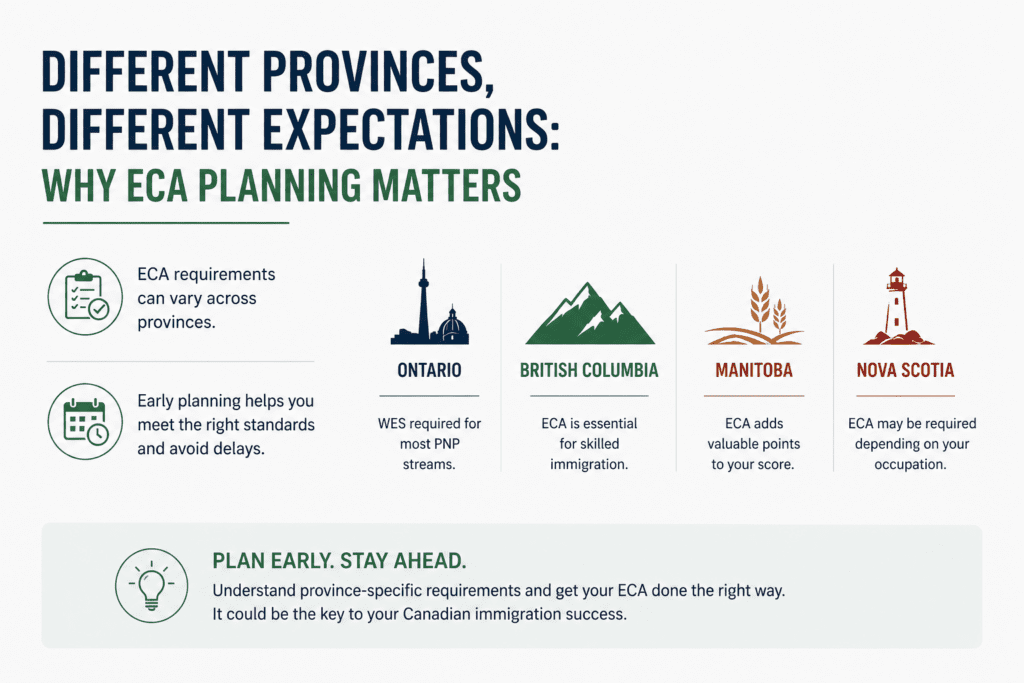
If you’re planning to move abroad from India, this is probably where you feel stuck. Everyone is talking about CRS scores, draws, job offers, or visas. But very few people talk about the real dealbreaker: your documents. Most immigration delays don’t happen because of low scores; they happen because an Electronic Transcript in India or other vital records aren’t ready. This guide breaks down PNP, Express Entry, and US pathways from the one angle that actually matters in real life: document readiness. By the end, you’ll know which pathway matches your profile and where people lose months without realising it. Which Pathway Should You Choose? Choose Canada Express Entry if your documents are complete and your official Indian university transcripts are already available for assessment. Choose the Canada PNP if your profile matches a specific provincial need and you can manage the additional documentation requirements. Choose US Pathways if you’re prepared for detailed credential evaluation and specific licensing steps. No matter the route, securing an Electronic Transcript Online and verified academic records from an Indian university is non-negotiable for success. Understanding the Three Immigration Pathways 1. Express Entry (Canada) Express Entry is Canada’s fastest immigration system, relying on the CRS score. However, behind the points sits one core requirement, an official and verified Education Credential Assessment (ECA). According to official IRCC guidelines, this assessment is mandatory for most applicants. In our experience handling thousands of Indian academic records, most delays happen because applicants apply for ECA evaluation much ahead of their official Academic Transcript is actually ready. Express Entry looks simple on paper, but it becomes a hurdle if your paperwork isn’t lined up early. 2. Provincial Nominee Programs (PNPs) PNPs are province-specific (Ontario, Alberta, BC, etc.), and each plays by its own rules. PNPs often ask for everything Express Entry requires, plus additional province-specific documentation and verification. This means a bit higher volume of documents. While PNPs reward the right profile, they also penalise poor preparation. Having an official and verified E-Transcript can significantly speed up the verification stage for provincial authorities. 3. US Immigration Pathways The US doesn’t use a CRS score. Instead, the focus is on credential assessment, equivalency and licensing requirements. If you’re an engineer, healthcare professional, or researcher, the quality of your University Transcript evaluation matters more than speed. This is where many applicants underestimate the process, as US evaluators require highly detailed academic analysis. Document Readiness: A Step-by-Step Reality Check Getting your documents ready for international immigration is often more about university logistics than just the immigration rules themselves. Below is a detailed, step-by-step explanation of how to navigate the document procurement process for Canada (Express Entry & PNP) and the US without the confusion of complex data sets. Phase 1: Preparation (Before You Create an Immigration Profile) Identify Your Highest Credential Most pathways only require an evaluation of your highest degree. For example, if you have a Master’s, you usually don’t need to evaluate your Bachelor’s. However, for US pathways, it’s often safer to evaluate both to ensure a complete credit count. Audit Your Physical Documents Check your final degree certificate and mark sheets for any name mismatches. Ensure your name exactly matches your passport. You will also need every single semester’s mark sheet, not just the final consolidated one, as many evaluators require a year-by-year breakdown. Phase 2: Choosing the Right Evaluation Destination The “Routing Error” usually happens when you send documents to the wrong body or authority. For Express Entry: WES (World Education Services) is the standard for most. This is mandatory before you can even create your profile. For PNP: You generally use the same ECA as Express Entry, but you must also be ready for additional provincial portal uploads. For US Pathways: You typically look toward ECE (Educational Credential Evaluators) or other NACES-member agencies. These often require a more intense “Course-by-Course” analysis. Phase 3: The Procurement Process Step-by-Step Step 1: Create Your Evaluation Account Register on the website of your chosen evaluator (like WES or ECE). Once you pay the fee, you will receive a unique Reference Number. This number is your identity; it must be included in every single piece of correspondence sent from India to them. Step 2: Request the Official Transcript from Your University You cannot send your own photocopies. You must contact your Indian University’s Registrar or Examination Branch. The Electronic Option: Many universities in India still don’t issue e-transcripts; do check if your university issues a Verified E-Transcript.  As the Electronic Transcript Online method is the safest and fastest way to move. The Physical Option: If they don’t have a digital or e-transcript service, the university must ship your academic transcripts in a signed and sealed envelope. Step 3: University-to-Evaluator Transmission The university (or a verified service provider like Worldwide Transcripts) sends the documents directly to the evaluator. If you are sending physical copies, always use a trackable courier. If using the Official Transcripts Online in India portal, ensure the university sends it to the specific electronic address recognised by the evaluator. Phase 4: Reality Check on Timelines University Processing: This usually takes 4 to 6 weeks depending on university holidays, backlogs and internal workload. Transit and Courier: Physical mail usually takes 8 to 10 days to reach North America from India, do remember to keep track of the movement. Evaluator Review: Once they receive the documents, the evaluation itself can take 4 to 6 weeks. Secondary Verification: If the evaluator emails your university to confirm the record is authentic, your timeline pauses until the university replies. Pro-Tips to Avoid Rejection The Golden Rule: Never open the sealed envelope. If the university gives you the sealed envelope to courier yourself, do not open it to “double-check” the contents. An opened envelope seal means an automatic rejection. Visibility: Your unique ECA Reference Number must be mentioned on the outside of the envelope in bold letters so the mailroom recognizes it immediately. Follow Up: If your status hasn’t updated in two weeks, contact your university

Scroll to Top